Capabilities
Permanent mold
Permanent mold, or gravity-fed die casting, pours aluminum into iron or steel dies. The metal solidifies faster and denser, so parts come out with tighter as-cast tolerances, a finer surface and less porosity than sand, without the cost of high-pressure die casting.
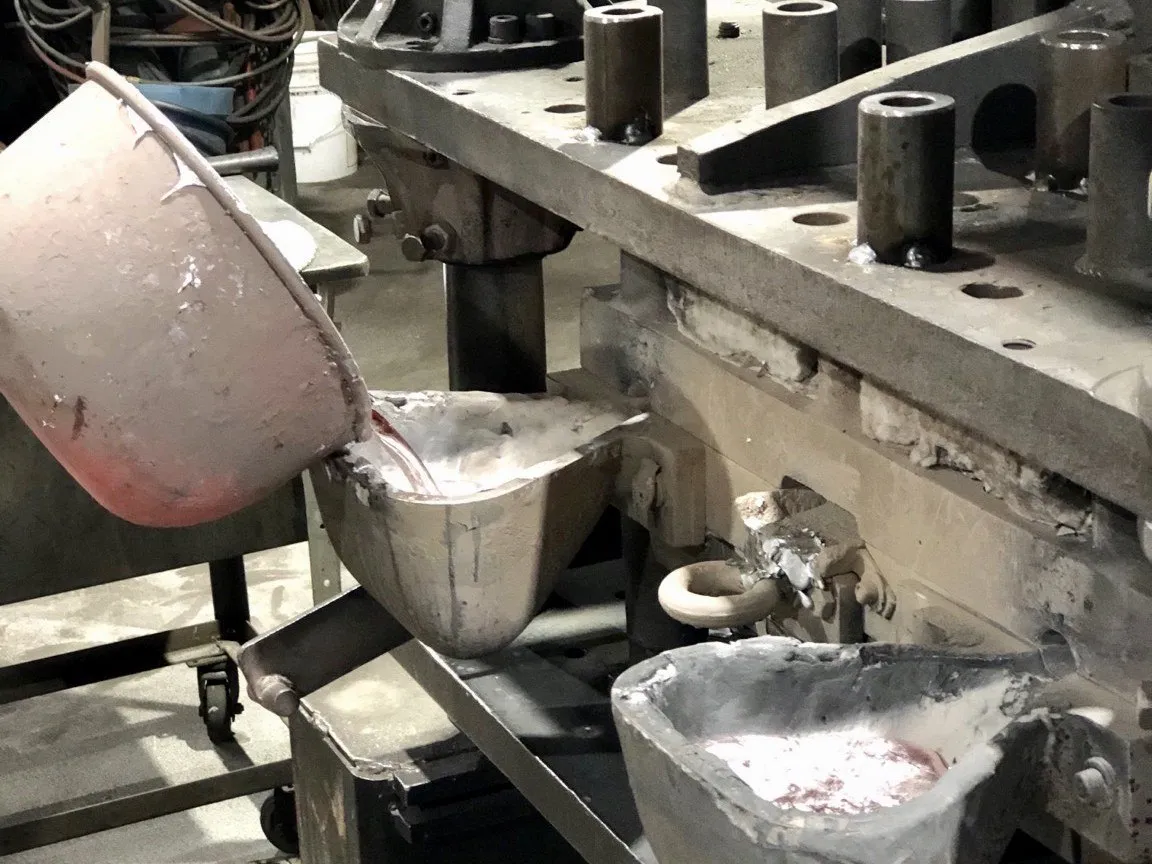
A permanent mold typically produces tens or hundreds of thousands of castings before it needs maintenance, so it pays off on higher volumes, usually 5,000 pieces a year or more, or wherever as-cast tolerances and finish matter.
Sand or permanent cores, inserts and other materials can be cast in. Permanent mold is also a good way to keep supplying a part after the original high-volume die-cast line has been retired.
Our machines cover runs from tens to tens of thousands and parts from a few inches to several feet across.
More capabilities
- Sand castingGreen sand for repeat parts and air-set (no-bake) for larger, complex or low-volume castings.
- CNC machiningIn-house CNC turning and milling, planned together with the casting.
- Heat treatmentCertified furnaces bring castings to the strength your print calls for, in-house.
- FinishingCastings cleaned, ground and blasted, ready for machining, coating or assembly.
- Prototypes & toolingCast aluminum prototypes in about a week, and tooling built and maintained in-house.
Related reading
Metal Sand Casting Process—Step-by-Step
Precision Sand Casting in 6 Steps. Sand casting is pouring molten metal into a sand mold; the metal then solidifies to fill the shape of the mold. While proper equipment and experience are required to produce a casting free of defects, the sand casting process itself is pretty simple.
Read the article →Why Aluminum?
Aluminum applications span from everyday items like fuel-efficient vehicles to smart phones to window frames to airplanes. It has a long list of inherent assets that makes it referred to as a “miracle metal” – lightweight, corrosion resistant, easily formed, highly conductive, highly reflective, non-toxic, durable and recyclable – and gives manufacturers and designers a wide range of options for product innovation and process improvements.
Read the article →3 Types of Sand Casting
Over 70% of the world’s metal castings are produced via the sand-casting process. Sand casting is highly efficient and cost-effective.
Read the article →
Have a drawing? Get a quote.
Tell us about your part, or just send the file. A real person reviews every request.